
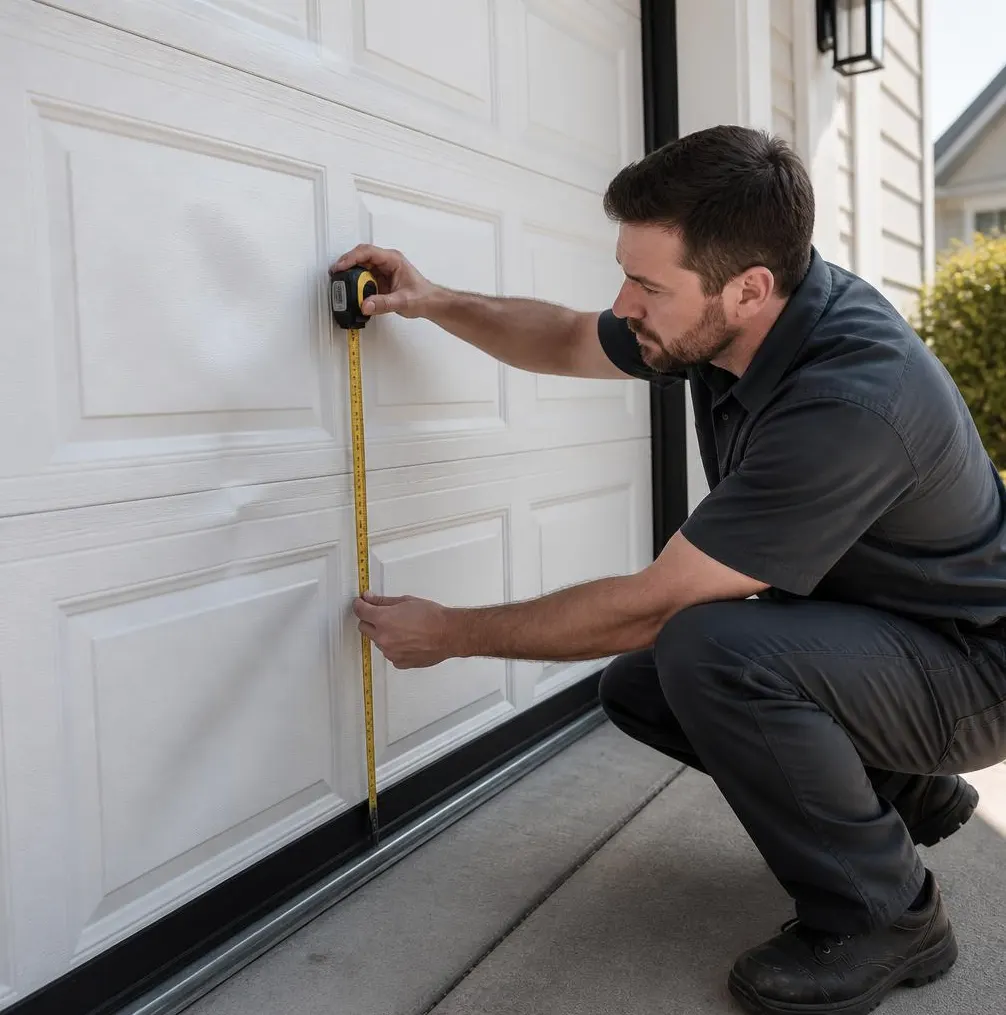
You pull into the garage after one of those sudden afternoon storms, and there it is — a trail of orange-brown spots along the bottom of the door, or a panel that looks slightly puffy where it never used to. One of you says it's nothing, just surface stuff. The other says the door is falling apart. You're both a little right, and this is how you figure out who's closer.
Why Garage Doors Rust and Swell Around Here
Garage doors in this part of Texas take a beating from two directions at once. In summer, long stretches of heat bake the paint and seals. Then a severe storm rolls through with hail, wind-driven rain, and dust, and the door goes from bone-dry to soaked in minutes. In winter you can get an occasional ice event on top of that. That swing between extremes is exactly what causes rust and swelling — it's not usually one bad storm, it's the repeated cycle.
Steel doors rust when the factory finish gets scratched or chipped — by hail, a bike pedal, a stray rock from the lawnmower — and water sits in that nick instead of running off. Once bare metal is exposed, rust spreads outward from that point, especially along the bottom panel where splash-back and standing water are most common.
Wood and wood-composite doors don't rust, but they swell. The wood fibers absorb moisture during a storm, expand, then shrink again as they dry out in the heat. Do that enough times and the wood stops bouncing back to its original shape. That's when you get a panel that sticks, a door that doesn't sit flush in the frame, or paint that cracks and peels along the seams.
Signs It's Just Cosmetic
- Small, isolated rust spots that haven't spread past the paint chip that caused them
- Surface rust on hinges or hardware that wipes off with a cloth, leaving solid metal underneath
- Slight discoloration on a wood door with no change in how it opens or closes
- Peeling paint with no soft or spongy spots when you press on the panel
Signs It's More Than Cosmetic
- Rust that has eaten through to a hole or a flaky, crumbly edge — the metal itself is compromised, not just the finish
- A panel that feels soft, spongy, or gives slightly when you press it (classic sign of water trapped inside a wood or composite door)
- The door binding, scraping, or needing extra muscle to close — swelling has changed its shape enough to throw off the track alignment
- Rust forming around the spring coils, track bolts, or hinges — moving parts rusting is a bigger deal than a rusty panel, because it affects how safely the door operates
- Water stains or rust trails appearing *inside* the garage on the wall or floor below the door, which usually means the weatherstripping has failed and moisture is getting past the seal entirely
What Actually Helps
If you catch it early, maintenance beats replacement almost every time. A few things make a real difference in this climate:
- Fix paint chips fast. A small rust spot you treat and touch up this month stays small. Left through another hail season, it turns into a hole.
- Check and replace weatherstripping along the bottom and sides every year or two. This single piece of rubber does most of the work keeping storm water out, and it degrades faster in Texas heat than people expect.
- Keep the bottom panel clear of standing water. If mulch, gravel, or a slope sends rain straight at the base of the door, that's the spot that will rust first, every time.
- Lubricate hinges, rollers, and springs a couple times a year. Rust on moving parts isn't just cosmetic — it adds friction, which stresses the opener and the springs and shortens their life.
- Repaint or reseal wood doors before the finish fully breaks down, not after. Once bare wood is exposed to rain, swelling starts fast.
When to Call Saginaw Garage Door Experts
If you're seeing rust around the spring coils or hinges, a panel that's swollen enough to bind on the track, or weatherstripping that's clearly let water inside, that's past the DIY-touch-up stage. Our team handles garage door maintenance visits to catch this kind of wear before it becomes a safety issue, and we do full spring repair and replacement when rust has weakened a coil to the point it's no longer safe to trust. We'll tell you straight whether you're looking at a cheap fix or a panel/door that's earned its retirement — no upselling, no guessing.
If your garage door is showing rust, swelling, or sticking after this year's storms, call Saginaw Garage Door Experts for an honest look — we serve Saginaw, TX and the surrounding area, and we'll settle the argument for you.